
Technical SEO Services That Help Google Crawl & Rank Your Website
Getting discovered by Google’s crawlers is the first step to ranking. We audit, fix, and optimise your website’s technical foundation so search engines can crawl, understand, and index your important pages.
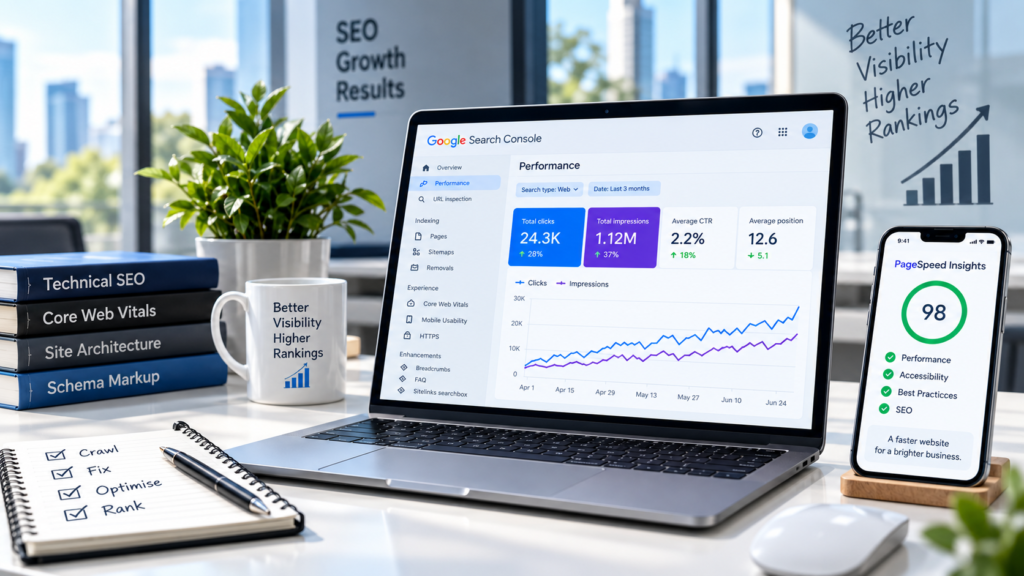
If You're Not Ranking, Something Is Broken.
Most SEO campaigns fail not because of bad content or weak links, but because the website’s technical foundation is cracked. Google simply cannot rank a site it cannot properly crawl and read.

Crawl Errors & Blocked Pages
Robots.txt mistakes, broken sitemaps, or blocked resources can prevent Google from discovering or accessing important pages.
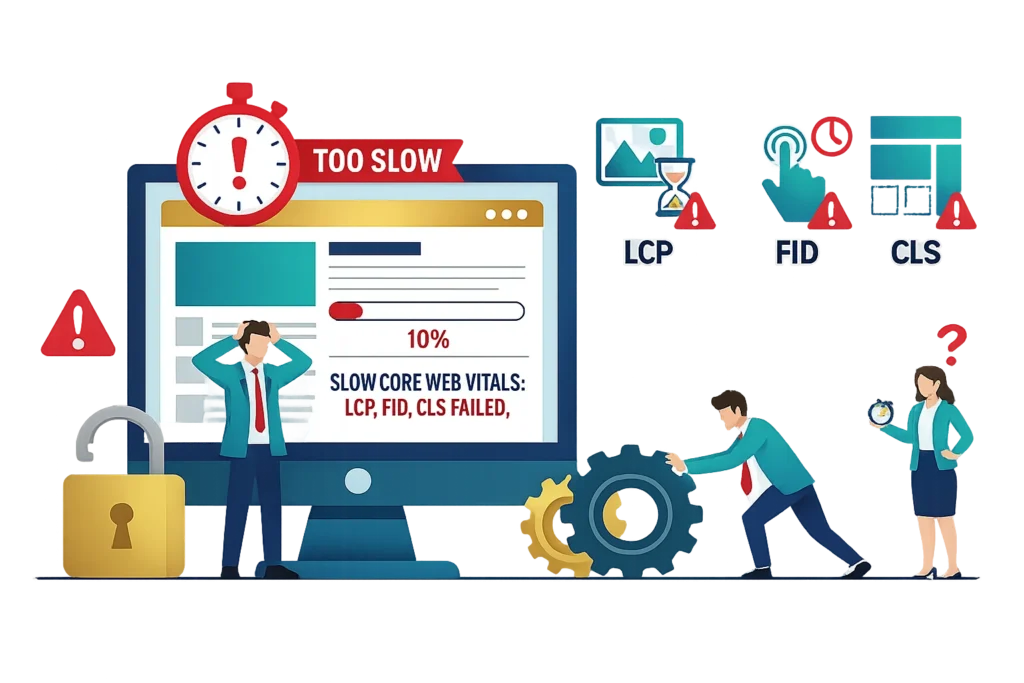
Slow Core Web Vitals
Poor page experience can hurt user engagement, while Core Web Vitals are part of Google’s page experience signals. We identify and fix performance issues that can affect usability and search performance.

Duplicate & Thin Content
Duplicate URLs, copied meta tags, and thin pages confuse Google and dilute your domain’s authority across multiple weak signals.

Broken Links & Redirect Chains
Every broken link wastes crawl budget. Long redirect chains leak link equity and slow down page discovery.
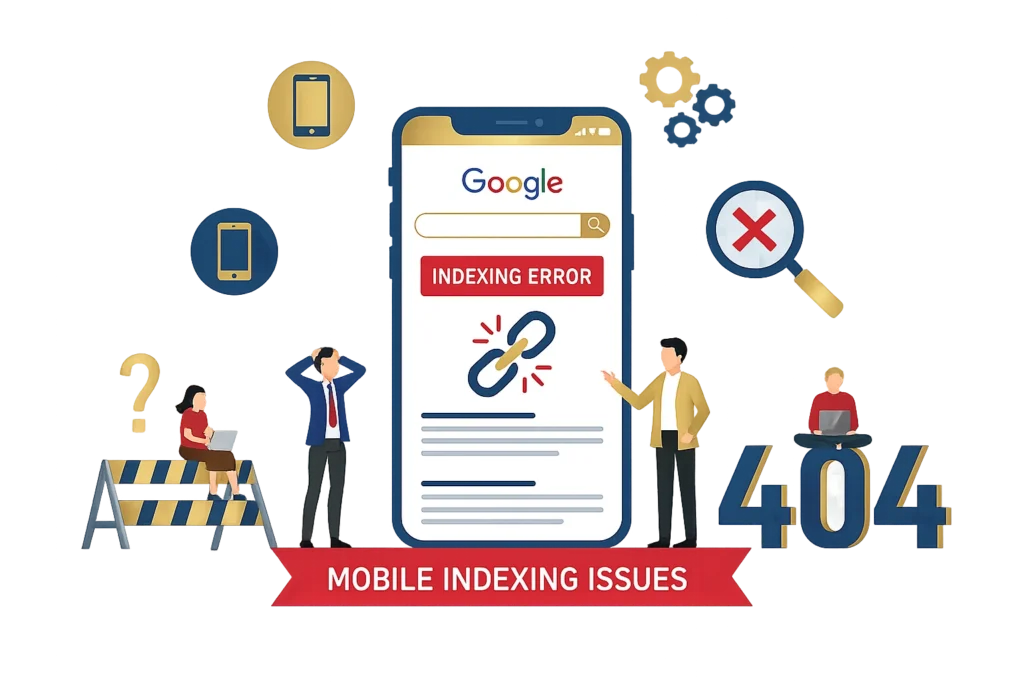
Mobile Indexing Issues
Google indexes your mobile site first. If mobile content differs from desktop or renders poorly, your rankings suffer immediately.

Missing Schema & Structured Data
Structured data gives search engines additional information about the meaning and type of content on your pages and can make eligible pages suitable for supported rich-result features.
What Is Technical SEO?
Technical SEO is the process of improving the technical foundation of a website so search engines can crawl, render, understand, and index its important pages efficiently. It covers areas such as crawlability, XML sitemaps, robots.txt, canonical URLs, redirects, site architecture, mobile rendering, Core Web Vitals, HTTPS, and structured data.
Unlike On-Page SEO, which focuses on content, headings, metadata, and other page-level signals, technical SEO focuses primarily on how your website is built and delivered to users and search engines. A technically sound website makes it easier for Google to discover important pages and understand how they relate to one another.
What Our Technical Audit Covers
A free score from a tool tells you nothing actionable. Our audit gives you a prioritised, expert roadmap, every issue ranked by its impact on your rankings.
Crawlability & Indexation
Robots.txt, XML sitemaps, crawl budget, index coverage, and pages Google cannot access. We also check HTTP status codes and indexability to ensure important pages can be discovered and indexed.
Core Web Vitals & Speed
LCP, INP, and CLS analysis across mobile and desktop. We identify performance bottlenecks in images, scripts, and server response that can affect user experience and search performance.
Mobile-First Readiness
Mobile SEO audit covering responsive rendering, viewport configuration, Core Web Vitals, and mobile/desktop content parity. Google primarily uses the mobile version of a site's content for indexing and ranking.
HTTPS & Security
SSL certificate validity, mixed content warnings, HSTS configuration, and all security signals Google uses to assess trust.
Site Architecture & Internal Links
URL structure, breadcrumb consistency, orphan pages, crawl depth analysis, and the internal linking structure that distributes page authority.
Structured Data & Schema
We check and validate LocalBusiness, Service, FAQ, BreadcrumbList, and Review markup against Google’s structured data guidelines and rich result requirements.
Every Fix Connected to a Measurable Outcome
Not just tasks we complete and invoice. Every technical SEO action we take is tied to a measurable improvement in rankings, traffic, conversions, or technical website health.
XML Sitemap Optimisation
We build and submit an accurate, dynamic sitemap that includes only indexable pages, eliminating crawl waste and ensuring Google discovers every important URL.
Google recommends maintaining an accurate sitemap containing the URLs you want discovered and indexed.
Robots.txt Configuration
Proper robots.txt rules to block low-value pages (admin, duplicate parameters, staging) while opening every page that should rank. Google recommends using robots.txt to control crawling and XML sitemaps to help search engines discover important URLs.
Redirect Chain Cleanup
Audit and fix every 301/302 chain, loop, and broken redirect, preserving link equity and reducing page load time.
Broken Link Repair
Comprehensive 404 identification via Screaming Frog and Search Console, followed by targeted redirects and internal link corrections.
Canonical Tag Implementation
Correct canonical tags on every page eliminate duplicate content confusion, consolidating ranking signals to the right URL.
Crawl Budget Management
For large sites, we prioritise Googlebot’s time, limiting faceted navigation URLs and infinite scroll pages that waste crawl budget.
Image Optimisation
Compression, WebP conversion, lazy loading, and proper alt tags — images are typically the #1 cause of slow LCP scores.
JavaScript & CSS Minification
Remove render-blocking resources, defer non-critical scripts, and minify CSS/JS files to dramatically improve First Contentful Paint.
CDN & Caching Setup
Implement browser caching, server-side caching, and CDN delivery to reduce time-to-first-byte globally — especially important for Indian audiences.
Server Response Optimisation
Identify hosting bottlenecks, enable compression (Gzip/Brotli), and optimise database queries causing slow Time to First Byte (TTFB).
Mobile Viewport & Rendering
Correct viewport meta tag, responsive breakpoints, and elimination of content that renders incorrectly on small screens.
Tap Target & UX Fixes
Buttons and links sized and spaced for mobile use — Google’s mobile-friendly requirements and real user experience, both satisfied.
Mobile-Desktop Content Parity
Ensure no content, structured data, or links are hidden or missing on mobile — critical since Google indexes the mobile version first.
Mobile Core Web Vitals
Mobile CWV scores are judged separately from desktop. We specifically optimise for mobile LCP, INP, and CLS thresholds.
LocalBusiness Schema
Tell Google exactly who you are, where you are, what your hours are, and what services you offer — in a structured format it can act on.
FAQ Schema
FAQ structured data helps search engines understand FAQ content. However, Google determines whether and how structured data appears in search results, so adding FAQ markup does not guarantee an expanded search result.
Review & Rating Schema
Where eligible, review-related structured data can help search engines understand review information and may make a page eligible for supported review-related search features.
BreadcrumbList & Site Structure
Breadcrumb structured data helps Google understand the relationship between pages in your site hierarchy and can support breadcrumb information in search results.
Technical SEO Takes Time, Here's Exactly What Happens.
Where does your investment go each month? A transparent, phase-by-phase plan, so you always know what we are doing and why.
Deep Audit & Foundation Fix
Comprehensive technical audit → Fix all crawl errors → Resolve redirect chains → Correct sitemap and robots.txt → Submit to Google Search Console → ranking snapshot captured.
Speed & Mobile Optimisation
Core Web Vitals improvements → Image optimisation → Script deferral → Caching configuration → Mobile-first compliance → Schema markup implementation across key pages.
Architecture & Internal Linking
URL structure review → Internal link audit and rebuild → Orphan page resolution → Crawl depth reduction → First ranking movements visible → Monthly report shared with you.
Ongoing Monitoring & Scale
Algorithm update monitoring → New page technical checks → Competitor technical gap analysis → Quarterly audit refresh → Rankings climb as technical health compounds.
Every Decision Backed by Data, Not Guesswork.
We use industry-leading tools so every recommendation is evidence-based. You don’t need to buy or learn any of these, we handle everything on your behalf.
Screaming Frog
Technical crawling, broken links, redirects, duplicate URLs and metadata analysis.
Google Search Console
Index coverage, search performance, URL inspection and Google-discovered issues.

SEMrush / Ahrefs
Keyword rankings, competitor research, backlink analysis, and SEO opportunities that support growth.

Google PageSpeed Insights
Core Web Vitals and performance diagnostics.

Google Rich Results Test
Structured-data validation for supported rich-result features.

Google Analytics 4
Traffic sources, user behaviour, and conversions tied directly to measurable SEO performance.
Customised Around Your Business, Not a Price List.
Every package is built after your audit because your competition level, site complexity, and targets are unique to you.
Technical Starter
For new or small sites with foundational technical issues
- Full technical SEO audit
- Crawl error identification & fix
- XML sitemap creation & submission
- Robots.txt optimisation
- 301 redirect cleanup
- Basic schema markup (Local Business)
- Google Search Console setup
- Monthly performance report
Technical Growth
For growing businesses ready to compete on performance
- Everything in Starter, plus:
- Core Web Vitals optimisation
- Mobile-first compliance audit
- Full schema markup suite
- Image & script optimisation
- Internal link architecture rebuild
- Duplicate content resolution
- Competitor technical gap analysis
- Monthly technical health report
Enterprise Technical
For large sites, eCommerce, or multi-location businesses
- Everything in Growth, plus:
- JavaScript SEO & rendering audit
- Faceted navigation management
- Log file crawl analysis
- Hreflang for multilingual sites
- CDN & caching configuration
- Per-location schema setup
- Quarterly strategy review call
- Priority support & faster delivery
Ready to Fix What's Holding Your Rankings Back?
Start with a free technical audit?
No sales pitch, no obligation. Just an expert view of exactly what is broken and how to fix it.
Answers to Your Technical SEO Questions
What is Technical SEO and why does it matter?
Technical SEO refers to all the behind-the-scenes elements of a website that affect how search engines crawl, index, and rank it. It includes site speed, mobile-friendliness, structured data, URL structure, and more. Without a technically sound website, even the best content and backlinks cannot generate rankings, because Google simply won’t be able to properly access and understand your pages.
How long does Technical SEO take to show results?
For sites with significant technical issues, you can expect initial improvements within 30–60 days of fixes being implemented, especially in crawl coverage and indexation. Core Web Vitals improvements can impact rankings within 4–8 weeks. Full compounding results from a comprehensive technical overhaul typically build over 3–6 months as Google recrawls and reindexes your improved pages.
Do I need Technical SEO if I already do content and link building?
Absolutely. Content and links are two legs of a three-legged stool, technical SEO is the third. If Google cannot properly crawl and understand your pages, your content never gets indexed and your links never pass authority to the right URLs. Technical issues can silently cancel out months of content and outreach work.
Once your technical foundation is healthy, a strong SEO Content Strategy can help you build topical relevance and target valuable search queries.
What is the difference between on-page SEO and technical SEO?
On-page SEO focuses on what is visible on your page, content, headings, keywords, and meta tags. Technical SEO focuses on how your website is built and delivered, crawl accessibility, page speed, URL structure, structured data, and server configuration. Both are essential, but technical SEO is the prerequisite: on-page optimisation is ineffective if the underlying technical architecture is broken. Technical SEO works alongside On-Page SEO, which focuses on content, headings, metadata, internal linking, and other page-level signals.
Will you make changes directly to my website?
That depends on your preference. We can either implement fixes directly (with your access and approval) or provide a prioritised fix document for your developer to action. Either way, we verify every change is correctly implemented before moving forward. Nothing is changed without your explicit sign-off.